Backflow Prevention: What Every Property Owner Should Know
Water is life—until something goes wrong. Imagine turning on your kitchen tap and wondering if what’s coming out is safe. That’s the reality when backflow happens. It can strike any property: homes, restaurants, offices, schools, or factories. The risks are real. The consequences can be serious—and sometimes, they’re invisible until it’s too late.
At National Plumbing, we see it all. From routine backflow testing to emergency plumbing calls in the middle of the night, we know how quickly a small issue can become a big headache. Here’s what every property owner should know to protect their water, their people, and their peace of mind.
What Is Backflow? 🚱
Backflow is when water flows the wrong way—backwards—through your pipes. It’s like a river reversing course and bringing all the debris upstream into your drinking supply. This can pull contaminants from soil, sewage, or even industrial chemicals into the clean water pipes.
Causes of backflow:
- Sudden drop in water pressure (like a burst main or firefighting nearby)
- Cross-connections between potable (drinkable) and non-potable water sources
- Faulty plumbing installations
Contamination scenarios include:
- Lawn chemicals siphoned into home water during sprinkler malfunctions
- Sewage entering pipes after heavy storms or floods
- Industrial fluids backing up into businesses through shared plumbing
Backflow isn’t just gross—it’s a genuine health hazard. Pathogens, chemicals, and toxins can enter your water supply. The Centers for Disease Control and Prevention (CDC) and local health departments warn that backflow can cause outbreaks of illness and property damage.
Common Backflow Prevention Devices
So how do you keep water moving in the right direction? The answer: backflow prevention devices. Think of these as one-way gates that only let water flow into your building, not out—or back in.
Types of devices:
- Atmospheric Vacuum Breaker (AVB): Simple, effective, common in garden hoses or irrigation.
- Pressure Vacuum Breaker (PVB): Used for sprinkler systems and outdoor plumbing.
- Double Check Valve Assembly (DCVA): Reliable for fire lines, apartment complexes, and businesses.
- Reduced Pressure Zone Device (RPZ): The gold standard for high-risk settings—hospitals, restaurants, labs.
Where are they needed?
- Irrigation systems
- Commercial kitchens
- Apartment complexes
- Manufacturing plants
- Anywhere the risk of cross-connection or contamination is significant
Each device has specific installation requirements laid out in the International Plumbing Code (IPC) and your local building codes. Incorrect installation? It’s like leaving the gate open.
Who Needs Backflow Testing? 🏢
Routine backflow testing isn’t just a good idea—it’s required by law in most regions. Both residential and commercial property owners are responsible for compliance.
Legal requirements:
- Most cities and states mandate annual testing for certain properties
- Commercial properties (restaurants, offices, factories) are usually required to test every 12 months
- Residential properties with irrigation or fire suppression systems may also be required to test
Why test?
- Ensure devices are working
- Stay compliant with local water authority regulations
- Avoid fines, water shut-offs, or liability in the event of contamination
How often?
- Minimum: once per year
- After repairs, renovations, or installation of new plumbing
- When local authorities conduct surprise inspections
Always check your city or county’s specific rules—violations can result in steep penalties.
Signs of Backflow Problems
Most people never see backflow until the damage is already done. But there are warning signs if you know what to look for.
Look out for:
- Discolored water—brown, yellow, or cloudy
- Odd taste or smell—metallic, earthy, or chemical
- Visible debris or particles in water
- Sudden drop in water pressure
- Gurgling sounds in pipes or toilets
- Water backing up in sinks, showers, or floor drains
If you notice any of these, treat it like a fire alarm. Stop using the water. Call for emergency plumbing help right away.
Why Professional Installation Matters 🛠️
Backflow prevention isn’t a weekend DIY project. The devices are technical, the installation is regulated, and the stakes are high.
Why use licensed, certified backflow testers like National Plumbing?
- We know the codes—local, state, and national
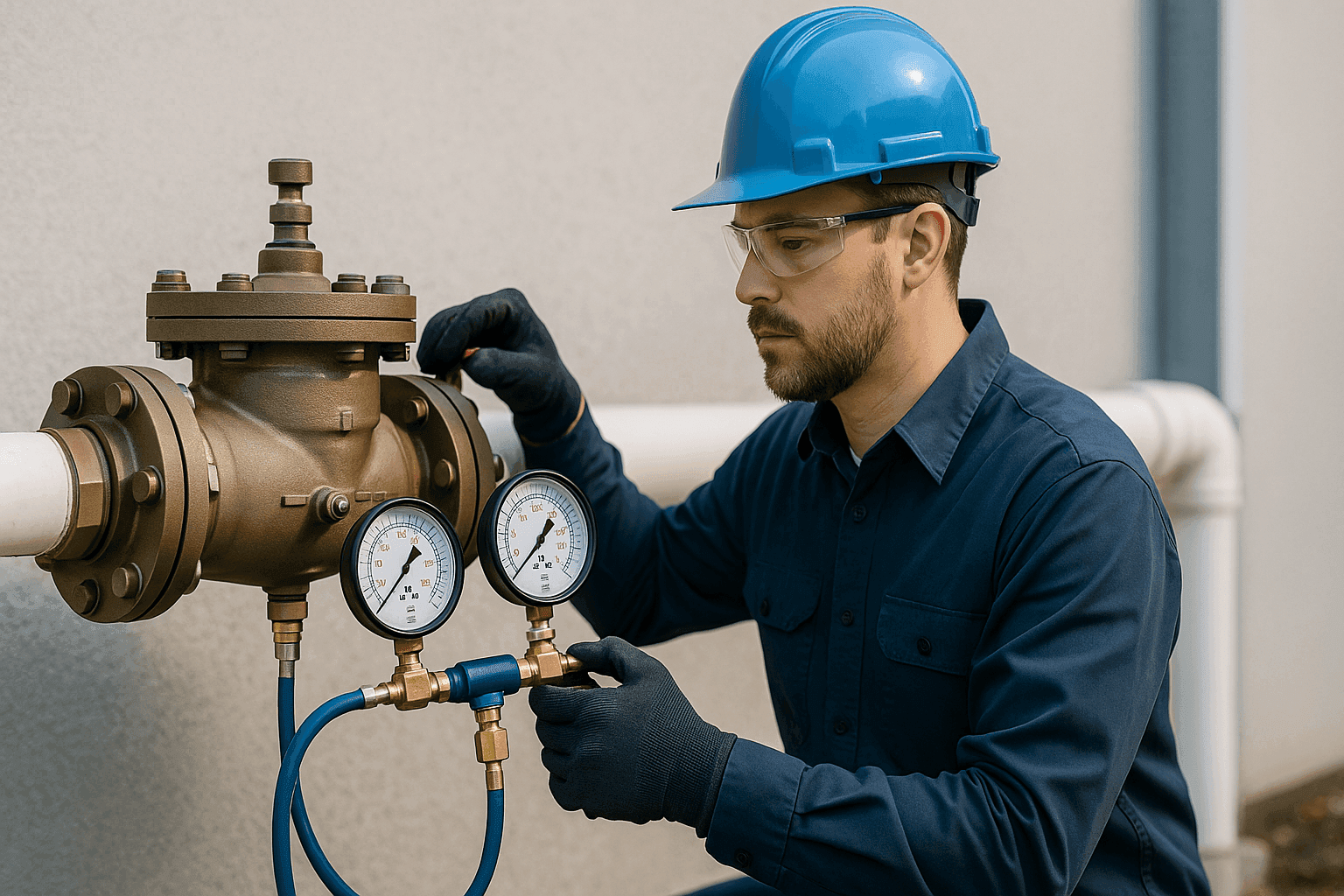
- We use calibrated testing equipment required by law
- Our team handles the paperwork and submits test results to local water authorities
- We spot hidden risks—like outdated pipework or illegal cross-connections
A poorly installed or untested device is as useful as a locked door with the key left inside. It might look fine, but the risk remains.
Quick Safety Checklist
- Know what kind of backflow prevention device your property has (or needs)
- Schedule annual backflow testing by a certified professional
- After plumbing repairs, always retest backflow devices
- Keep test reports for your records—authorities may request proof
- Never bypass or remove a backflow device, even for “just a minute”
DIY vs. Call a Pro
It’s tempting to handle plumbing issues yourself. But with backflow, the risks are too high for shortcuts.
DIY:
- You can check for obvious leaks or visible device damage
- You can shut off water in an emergency
Call a pro for:
- Installation, repairs, or replacement of backflow devices
- Annual testing and paperwork
- Troubleshooting hidden or recurring issues
Working with certified professionals ensures compliance and keeps your water safe—especially if you ever need emergency plumbing or pipe repair near you.
What Pros Do On Arrival
When National Plumbing arrives onsite, here’s what happens:
- Inspect visible plumbing, devices, and fixtures
- Test the backflow device using calibrated gauges
- Check for cross-connections, leaks, or signs of contamination
- Document findings for your records and local authorities
- Advise on any necessary repairs or compliance steps
If a device fails, we act quickly to protect your water supply and restore safety.
Prevention & Maintenance
Backflow prevention isn’t “set and forget.” Here’s how to keep protection strong:
- Schedule annual testing, even if your property “seems fine”
- Replace old or malfunctioning devices—don’t wait for failure
- After any pipe repair or renovation, retest the prevention device
- Educate tenants, staff, or family members about not tampering with devices
- Watch for seasonal issues—heavy rains, freezes, or main breaks
A little attention today prevents big headaches tomorrow.
Costs & Time Factors
How much does backflow prevention cost? It depends on the device, property type, and local code.
Typical factors:
- Device type: Simple vacuum breakers cost less; RPZs are pricier
- Labor: Professional installation or testing fees vary by location and system complexity
- Frequency: Annual testing is a recurring cost, but usually takes less than an hour
- Repairs: Caught early, repairs are minor. Ignored, costs can rise quickly.
Always budget for annual testing—that’s the best way to avoid emergencies and compliance issues down the road.
When It’s an Emergency 🚨
Sometimes, backflow is more than a risk—it’s a crisis.
Emergency scenarios:
- Sudden water discoloration or odor
- Reports of illness linked to building water
- Sewage or chemical smell from taps
- Major plumbing failure or burst pipes
In these cases, shut off the affected supply and call National Plumbing right away. Our emergency plumbing team responds 24/7. Getting help fast can protect your health and keep your property in the clear.
FAQ
Q: Do I need a backflow device in a new home or business?
A: Most new builds are required to have proper backflow prevention, especially if you have irrigation, fire sprinklers, or commercial kitchens. Always check with local code officials.
Q: How do I know if my device is working?
A: Only certified backflow testers can confirm functionality. Visual checks aren’t enough—proper testing uses specialized equipment.
Q: What happens if I skip annual testing?
A: You risk fines, water shut-off, and liability for contamination. Some insurance policies may not cover damages if you’re not compliant.
Q: Can I install a device myself?
A: In most areas, only licensed plumbers can legally install or repair backflow devices. DIY attempts may fail inspection or void compliance.
Local/Seasonal Considerations 🌦️
Climate and location matter:
- In colder regions, devices may need insulation or freeze protection
- In flood-prone areas, ensure devices are above flood level and accessible
- Coastal communities face higher risks of saltwater or industrial contamination
- Properties with large landscaping or irrigation systems need special attention before and after spring startup
Always consider your unique environment and ask your plumbing professional about additional precautions.
Backflow prevention keeps your water safe, your property compliant, and your mind at ease. Don’t gamble with water quality—let National Plumbing’s licensed, certified testers handle the details so you can focus on what matters most.
Call National Plumbing now — or reach us anytime at 844-484-2680 .